Horology laboratory · Study C.01
Give
back time.
Before working on a piece,
listen to what holds it back.
Scroll down: into the caliber
01 / Opening
Enter without erasing
the traces.
Every mark reveals a relationship. Opening helps us understand it.
A · Power reserve · Barrel
The impulse begins held in reserve.
The barrel stores the energy that makes the whole journey possible. A coiled spring in no hurry.
B · Transmission · Gear train
Force learns a scale.
The gear train distributes motion before passing it to the pulse. Each jewel reduces friction.
C · Cadence · Balance and hairspring
Moving forward also means pausing.
Balance and hairspring alternate impulse and pause to produce a measure.
Nothing moves alone.
A watch builds time by transferring energy, reducing it and giving it cadence, across many parts.
02 / Mechanism · Complete chain · stable
The logic of
the invisible.
Remove a function. Follow the consequence.
Current reading
The pulse finds its rhythm.
The three layers form a continuous chain. Observation comes before any adjustment.
The CIRCA approach
Preservation also
means knowing pausing.
A mark of use is not necessarily a flaw. Restoration means distinguishing a piece's memory from what keeps it from working.
03 / The bench
Four gestures, no hurry.
01
Take it apart, one part at a time
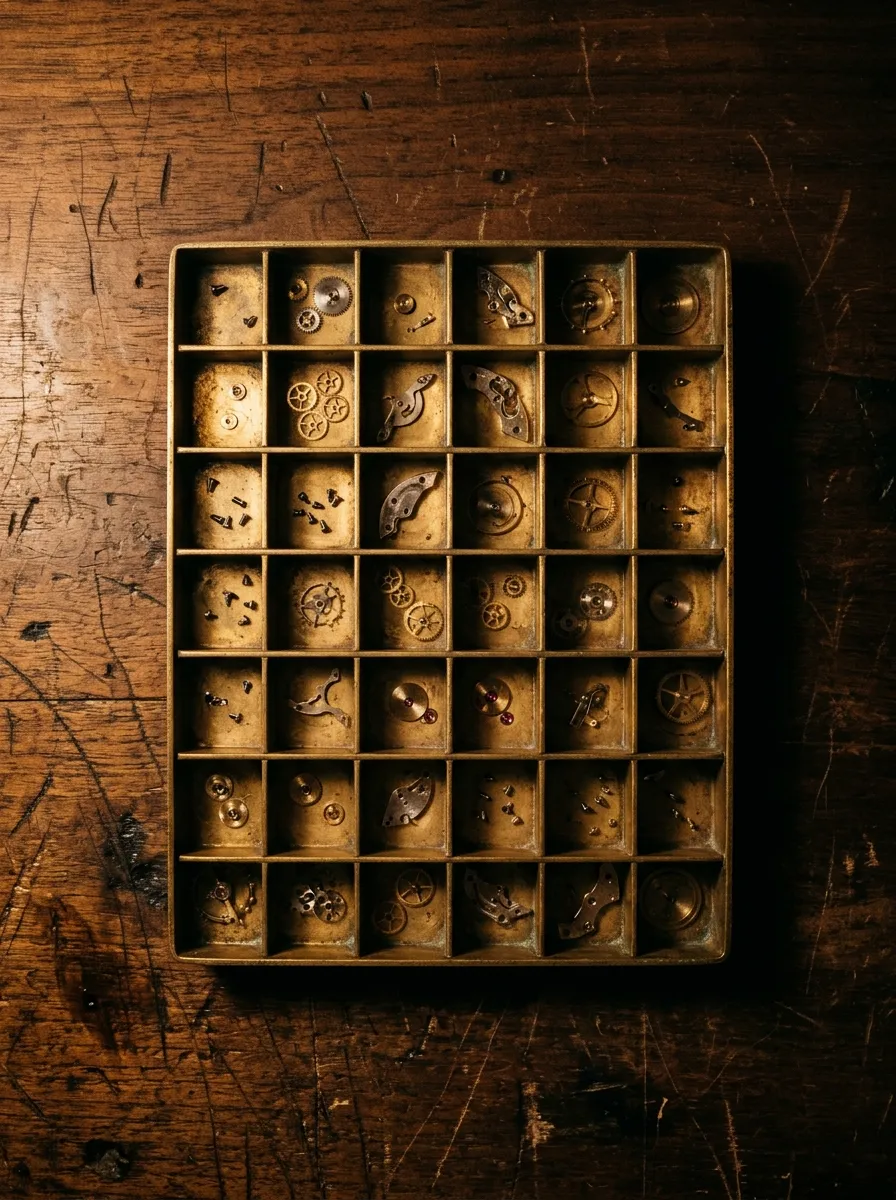
Every screw goes to its own place in the tray. Nothing is improvised on the way back.
02
Adjust the balance
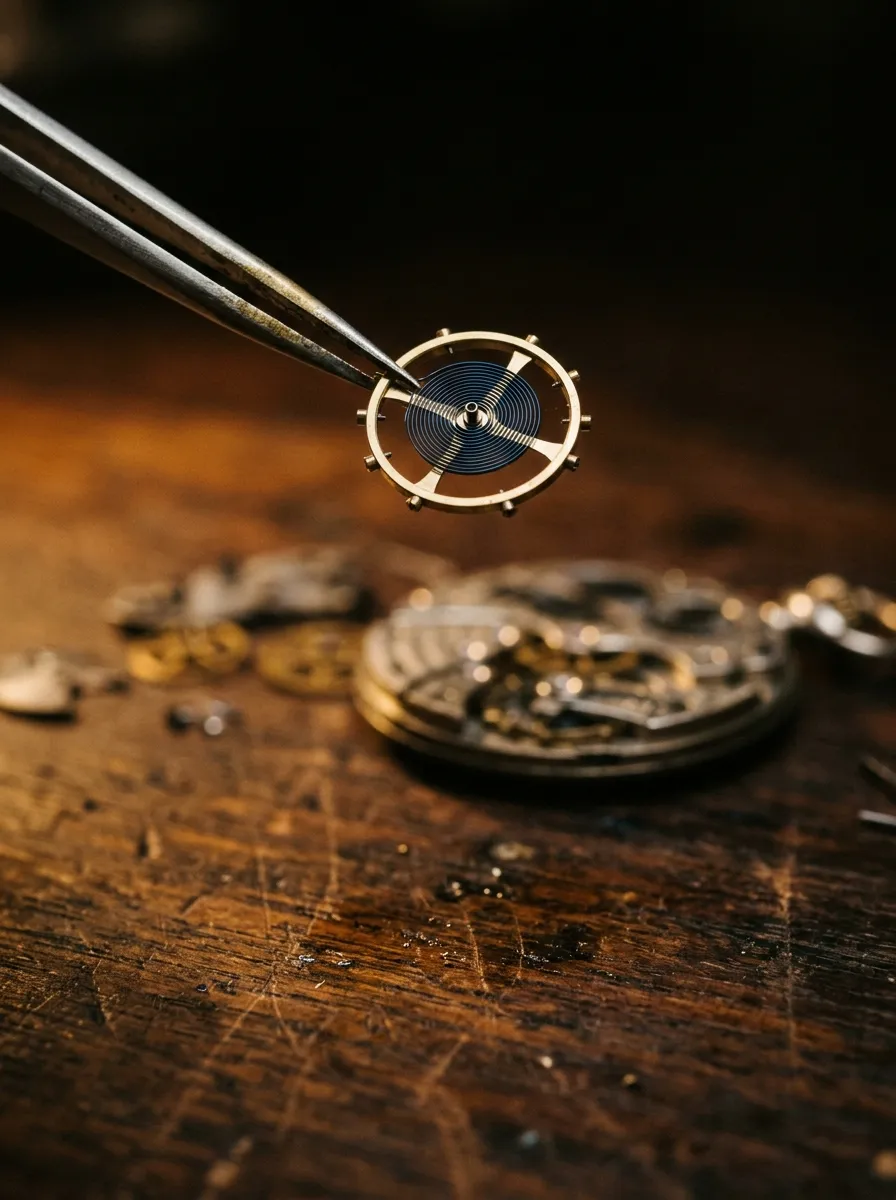
The hairspring is checked for flatness and centring. A tenth of a millimetre changes the day.
03
Oil only what turns
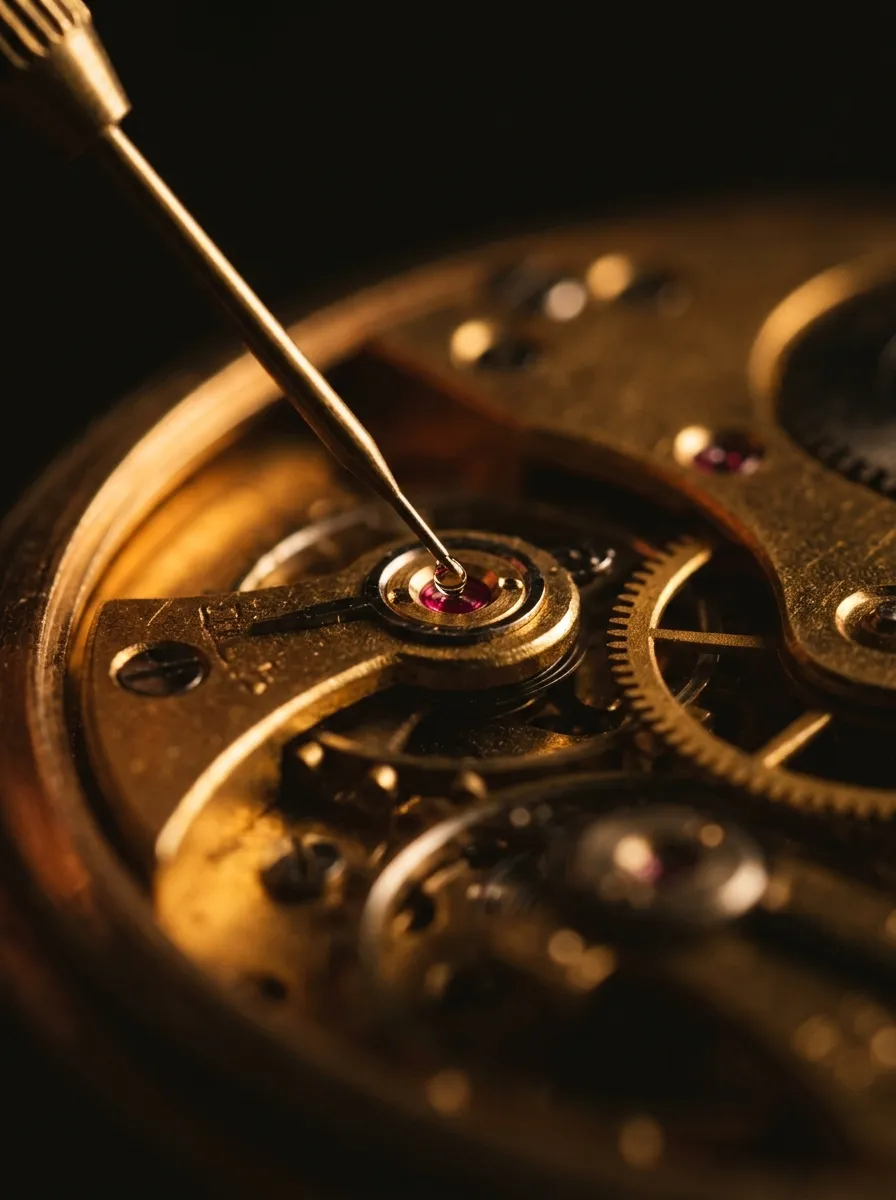
One drop per jewel, the size of a pinhead. More oil is not more care.
04
Write it down
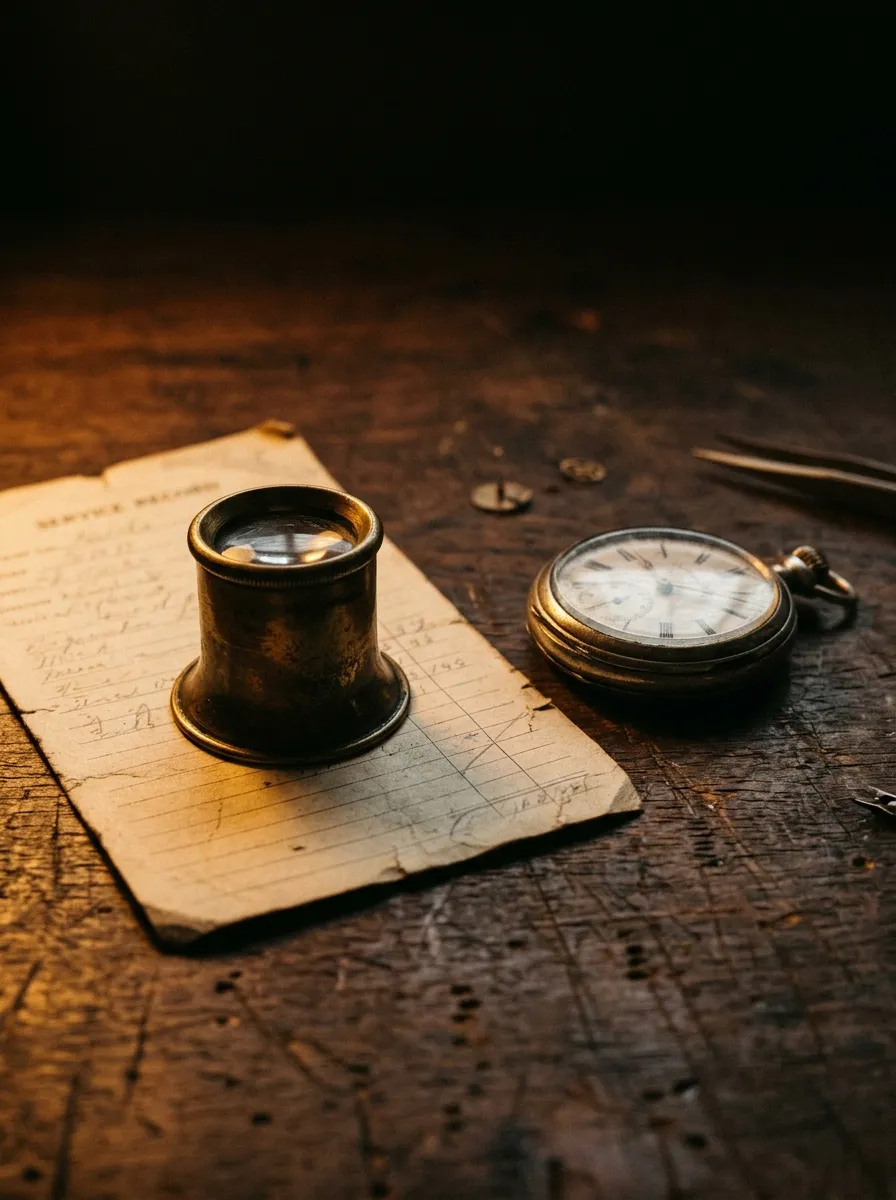
Every measurement goes on the piece's card, so the next hand knows what we did.
04 / The test
The tape does not lie.
On the timegrapher every tick becomes a dot. A healthy piece draws a single, straight line.
- Rate
- +38 s/d
- Amplitude
- 214°
- Beat error
- 2.8 ms
Two lines drifting apart: the balance limps and the watch runs fast.
18,000 bph · 1 dot = 1 tick
Study archive
Objects that hold time.
Fictional study pieces, without brands or historical attribution.
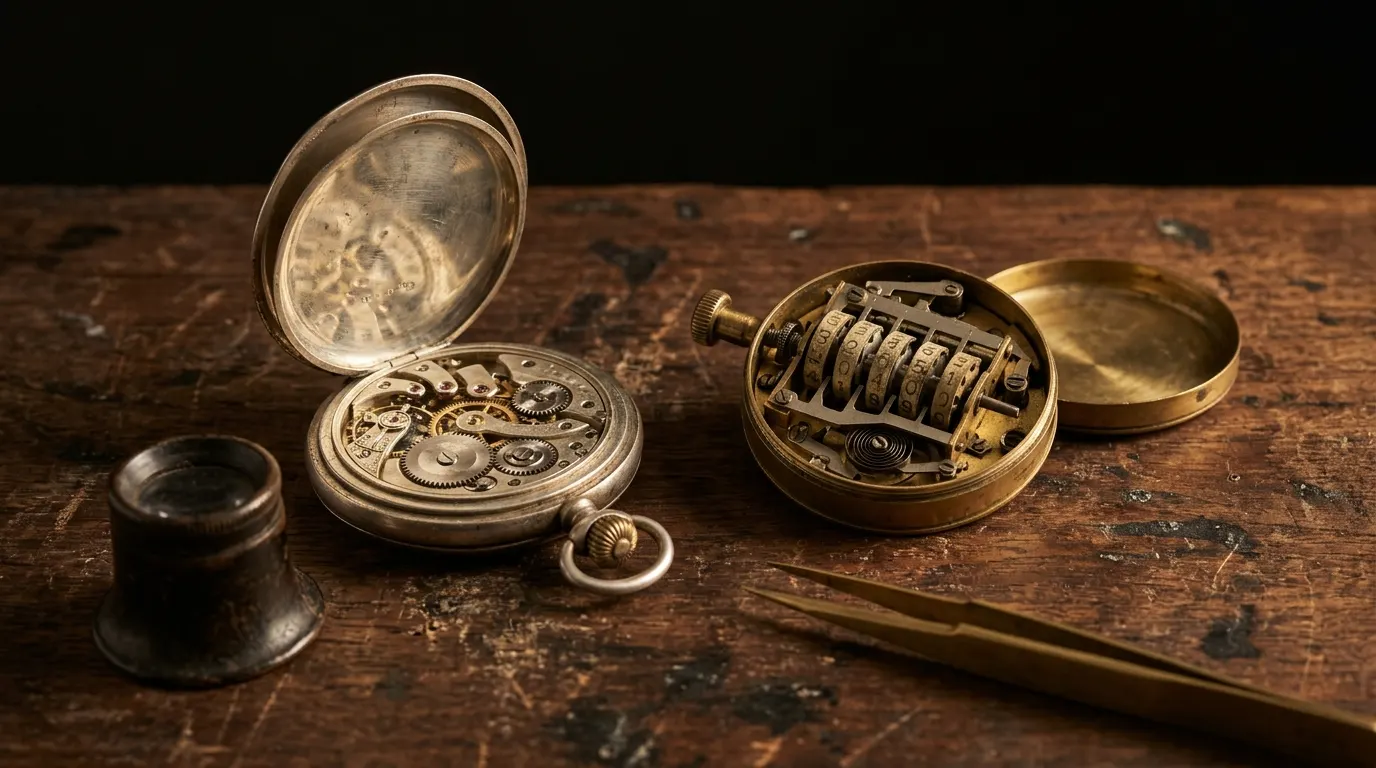
C.01
Pocket watch
Reserve and pulse. A manual caliber lets us trace energy from barrel to balance.
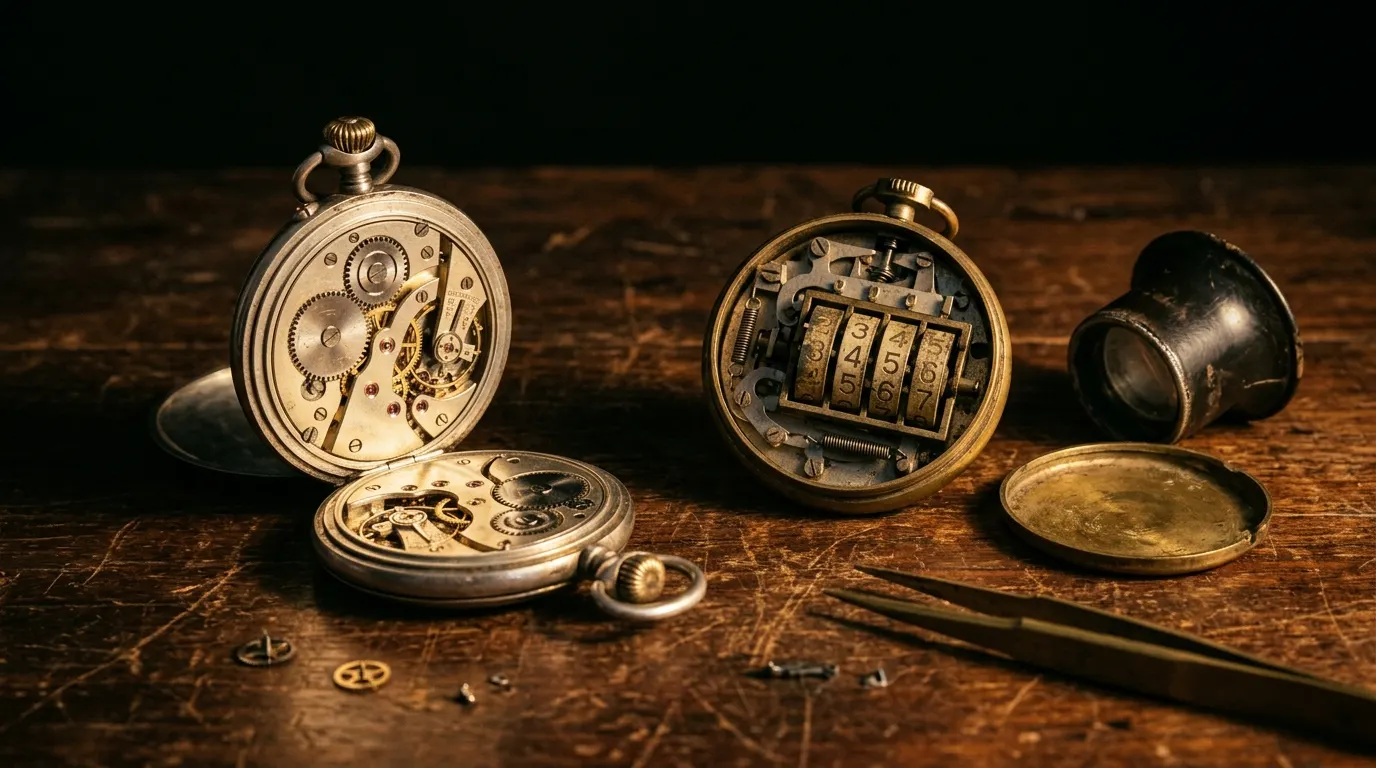
C.02
Mechanical counter
Transmission and return. Levers, springs and wheels turn a gesture into a count.
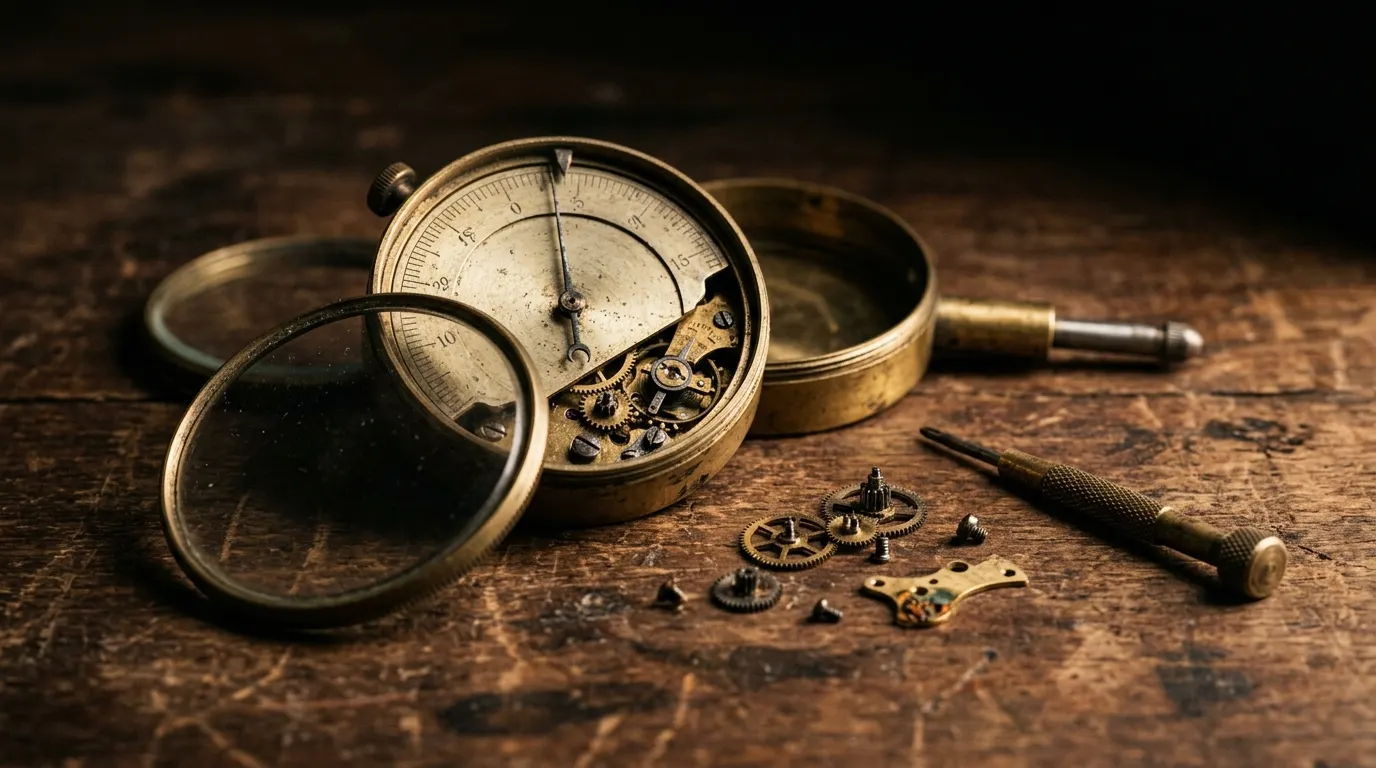
C.03
Measuring instrument
Reference and repetition. A reading only makes sense against a reference.